
“At crucial junctures…
every individual makes a decision, and every decision is individual.”
~ Raul Hilberg, Holocaust Scholar
Oath & Opposition:
Education under
the Third Reich
During my tenure at the U.S. Holocaust Memorial Museum in Washington, D.C., I researched and created a learning module for teacher training that critically examines the role of educators during the Holocaust and its applicable lessons for today.
Holocaust Education programs are founded on the belief that a healthy society depends upon engaged citizens. By studying the choices made by individuals and institutions during the Holocaust, participants gain fresh insight into their own professional and individual responsibilities today.
Training programs today are offered for those in the military, law enforcement, judiciary, education, and medical fields. These same institutions that were to uphold democracy & were entrusted to protect their citizens, failed during the Holocaust. How can we safeguard against making the same mistakes today?
This learning module examines the role of individual teachers and the education system under the authority of the Third Reich. Teachers were obligated to join the National Socialist Teacher’s Union and take an oath of loyalty to the führer. Within that framework, teachers were still able to make individual choices; some chose to comply with Nazi ideology, while others chose to act in opposition. This close scrutiny of the past provides a framework for a discussion on the role and responsibility of teachers in the education system today.
A short film sets the historical context. Participants then examine primary source documents in case studies and survivor testimony clips that highlight the pressures felt by and the range of choices available to teachers during Nazi rule.
Intro Film
This short introductory film sets the historical context for the case studies and discussion.
Case Studies
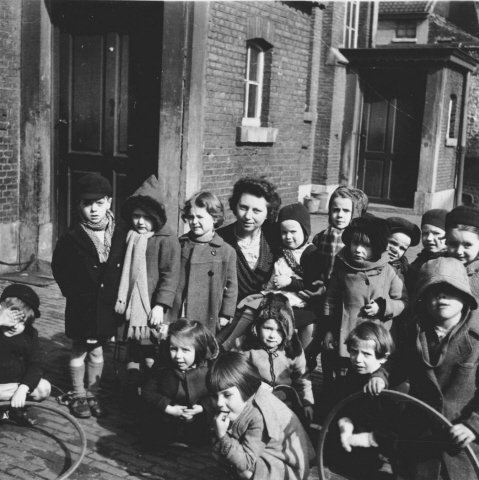
Jeanne Daman:
Risking Her Life to Protect Her Students
Jeanne Daman was a schoolteacher who saved 2,000 Jewish schoolchildren and worked for the Belgian resistance.
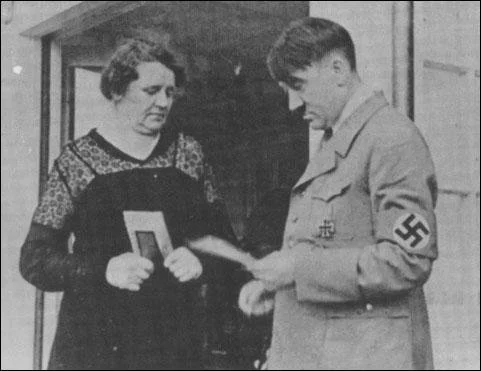
Teachers could be recognized and promoted as leaders within their school or community for sending portfolios of Christmas or birthday greetings from their students to Hitler.
Teachers Ask Students to Write Letters to Hitler

Teachers Facilitate Sterilization of
Students at Deaf Schools
Teachers, local police, and city government officials collaborated with the Nazis to carry out the orders.
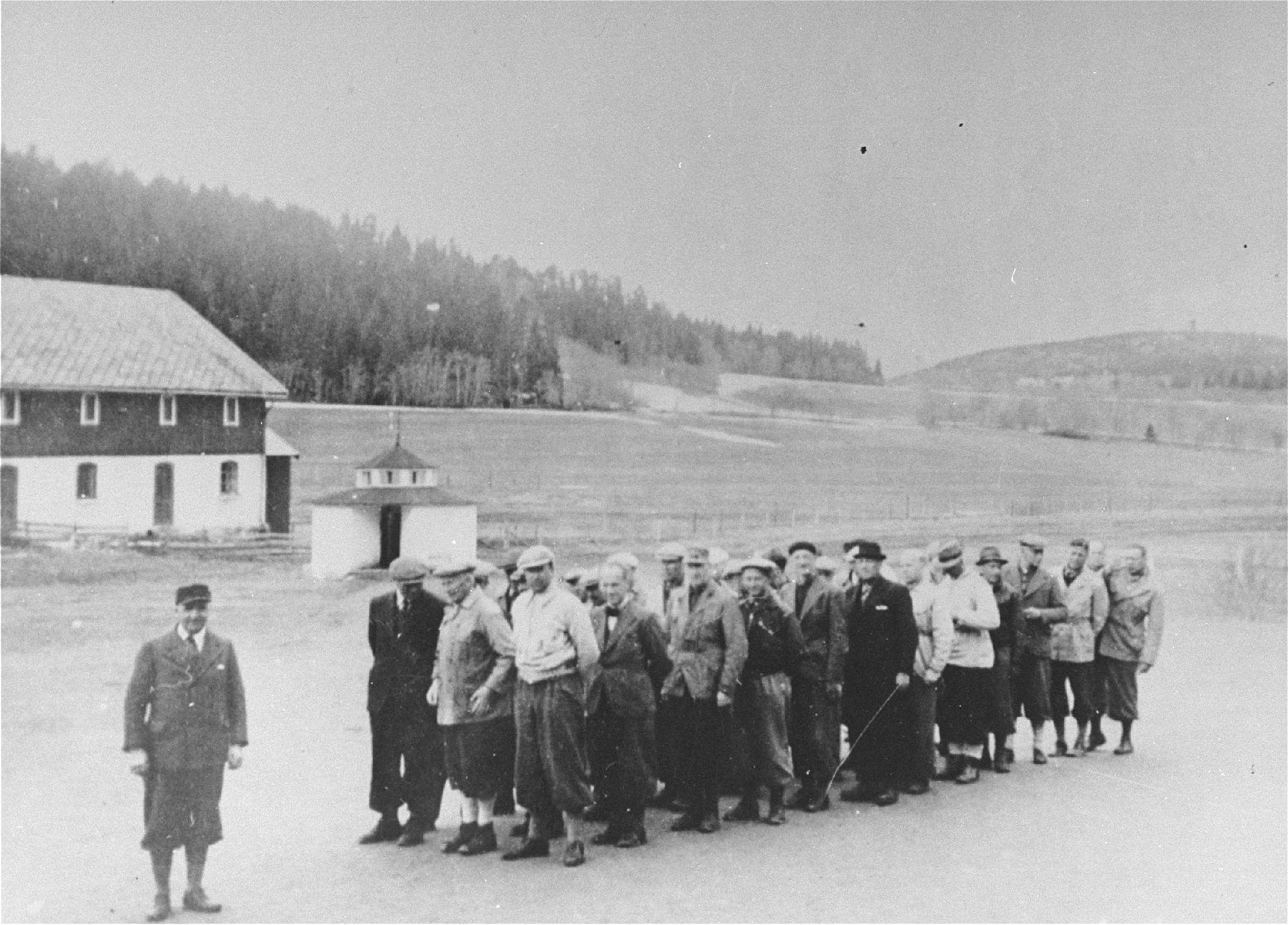
Arrest of Teachers Prompts Nationwide Protests
~ Norway
90% of Norway’s 14,000 teachers resigned from the national teachers union under German occupation, refusing to teach Nazi ideology.
Access the link below for the PDF containing all four case studies, discussion questions, and lesson plan.
Survivors share their experiences during the Holocaust related to their teachers, schools, and classmates.
Clips should be watched in pairs to have a better understanding of the full spectrum of choices made.
The final clip, featuring Esther Bem, serves as a conclusion for the learning module as a whole.
Survivor Testimonies
Lili Armstrong: (Berlin, Germany)
“She came into the class with a big book under her arm, & she addressed us. She spoke a slightly old-fashioned German. She would say, ‘Meine kinder—my children—meine Kinder, today we are changing our lecture & from now on, we are going to read Mein Kampf, written by our Führer, Adolf Hitler. And we have to interrupt our Romantic literature like Eichendorff & can’t read anymore Goethe or Schiller.’ And she was upset. She was very upset. I think she had tears in her eyes. At the time, I wasn’t quite sure whether she was joyful about Hitler or tearful that we have to change our literature. But I go for the second one; I know that for sure. ”
Eva Brewster: (Berlin, Germany)
”“When that Nazi teacher—she was the only one that was a party member at that time, and she recruited all the kids she could to the Hitler Youth. And she was also working with the Gestapo, the secret police, and so she spied on parents, on kids, on other teachers, and so everybody was really afraid of her. . .”
Werner Halpern: (Nördlingen, Germany)
“There was at least one teacher who tried to be kind. He rescued me a few times when, after school, I was being threatened by my fellow students in the school courtyard, and he happened to come by and chase them away so I could go home. But that occurred two or three times. He kind of took some special effort to make sure I’d be all right. But that was only one teacher.”
Emma Mogilensky: (Cronheim, Germany)
“A real serious change that I noticed was when we found one morning when we went to school that all the other children had formed two lines in front of the schoolhouse door, and, as we walked through those two lines, they beat us up. And I went to the teacher and I complained, and he said, ‘Well, what did you expect, you dirty Jew?’ And, from that, we figured that he had the children every morning in church—they had to go for Mass every morning—& we figured that what he had done is organize the children to beat us up.”
Leonard Katz: (Dresden, Germany)
“The whole class was asked to go there by bicycle as, you know, physical exercise. So, everybody had a bicycle but one of the kids in the school. And so the teacher said, ‘Well, Katz, you’re Jewish, you can give your—you’re not going anyway—can’t you give this kid the bike?’ And about, I’d say, 90 percent of the class said—I mean, they stood up as one—‘if Katz doesn’t go, we all don’t go.’ Now that was a very lifting experience. It turned out that he borrowed a bike from somebody else and we all went, but just the attitude of the class—that was really something.”
Rosa Marx: (Vienna, Austria)
“The girls in the classroom, who had some of them had been my best friends, just completely ignored me. They put their head down or looked elsewhere. And I was considered an outcast. I just was zero. I think that part really was the greatest shock: that you can be close friends with somebody, that you can trust a person, and suddenly that they would turn against you just because you’re Jewish.”
Hannah Altbush: (Cologne, Germany)
“After November, after Kristallnacht, I—the day after—I got up in the morning. I said, ‘I’m going to school.’ And my mother said, ‘I don’t know, you know, how you’re going to be received.’ And I said, ‘I am going to school. I’m going to face them all & show them all that I’m coming to school.’ By this time I was angry. I was scared, but I was also very angry. And I told Ilse, ‘I’m going.’ And she said she’s coming with me. So the two of us went to school the next morning. And the effect on the—all the students—there was like very strange because they wanted to show us that they were with us. Our desks were filled with fruit & candy.”
Rudy Kennedy: (Rosenberg, Germany)
“Early in the morning and there were a lot of people lining up the streets, jeering, laughing. And out of that crowd came a friend of my father. His name was Studienrat Lüdtke, a teacher, Catholic. And he had been discharged from—he was no longer allowed to teach—because one of his nine children had denounced him to the Nazis that he still had a Jewish friend and he didn’t believe in Hitler.”
Esther Bem: (Osijek, Yugoslavia; hid in Italy)
“And I also want to say that I have—as I was passionately going after this business of living—I feel today such a gratitude to those people that saved us. And these are ordinary—these were ordinary people that will never be in history books, that I unfortunately don’t even remember their names and probably they’re not alive anymore. And I probably wouldn’t have even the emotional strength to find them. But I want to say in the era, when goodness was very rare, they cultivated it. And they showed that human decency and heroism, which was so rare in those times, they did it for us. And I am aware today that to be heroic is so unpredictable. They probably wouldn’t have known by themselves that they are going to behave the way that they did. They simply reacted to our despair with compassion. They didn’t think of themselves. They didn’t care what happens to them, and when you think, we were not family, we were not even friends. We were strangers that fell from somewhere into their laps, and they never looked for excuses to say, “Well we can’t, I’m sorry, we have a young family.” Never. And they were—never made us feel even that we are intruding on them. And this is something that I want the post-Holocaust generation to know, that people have choices. And they have proven it.”